Upfront Tip
Weekly. Free. Straight from the driver's seat.
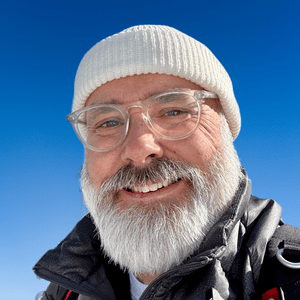
I ran into John at the Delta Sonic on Erie. He recognized me from my posts on the Syracuse Uber driver Facebook group. We hit it off immediately, so I begged that we connect on the show. And I’m grateful he agreed.
John has completed approximately 30,000 rides as an Uber and Lyft driver. He mostly does Lyft now.
In all those trips, he says he’s only had one really bad experience. Two women punched him, damaged his phone and dashcam, and left him calling the police. You might think an experience like that would convince someone to stop driving, but John is still out there, picking up strangers and taking them where they need to go.
John’s retired, though retirement doesn’t mean what we sometimes imagine. He still needs to work. He told me plainly that he never became rich, and driving allows him to earn money without the physical demands of other jobs. He has a bad back, so spending his working hours sitting in a car makes sense. He can decide when to leave the house, how long to work, and when to come home.
Before becoming a driver, John had an entirely different career. He graduated from Syracuse University’s Newhouse School in 1976 and went on to work as a professional film and video editor in New York City. He edited commercials back when editing meant physically cutting and splicing film. He remembers the transition from film to videotape, then to computers and digital editing software. Throughout his career, he kept learning new technologies because the profession demanded it.
Eventually, though, technology wasn’t the only thing changing. The people hiring editors were getting younger, and John was getting older. He told me that younger people at advertising agencies didn’t want to work with the old guy, even though he had decades of experience and knew how to solve problems they were encountering. As he put it, experience didn’t count anymore.
I found that part of our conversation particularly interesting. Here was a man whose professional career had been transformed by technology, sitting in the back of my Tesla. At the same time, we discussed autonomous vehicles and the possibility that technology might eventually transform his second career, too. We talked about self-driving cars, artificial intelligence, and how quickly the world can change around someone who has spent a lifetime becoming good at something.
But what interested me most about John wasn’t his career or even his extraordinary number of rides. It was the way he thinks about the people he drives.
John and I approach rideshare driving very differently. I spend a great deal of time studying the economics of Uber. I look at the distance, estimated time, passenger rating, destination, and likelihood of receiving a tip. I decline plenty of trips because I don’t believe they’re worth taking. John, on the other hand, accepts nearly everything. He prefers to stay busy rather than sit around waiting for a better offer.
I don’t necessarily agree with his strategy. In fact, I think he could probably improve his earnings by becoming more selective. But I also recognize that John is making decisions based on his own circumstances and priorities. He’s not trying to maximize every dollar per mile. He wants to work, earn some money, and provide transportation to people who need it.
At one point, John talked about picking up people who work at places like McDonald’s. He sees how much they’re paying to travel across Syracuse to jobs that might not pay particularly well. Sometimes he wonders how much of their daily earnings goes simply to getting to work. He said it breaks his heart.
That conversation stayed with me because I spend so much time thinking about what an Uber driver should earn. I believe drivers deserve fair compensation for their time, their vehicles, and the responsibility they assume. But John reminded me that there’s another person involved in every transaction. The passenger has a financial situation, a reason for traveling, and a life that we generally know very little about.
John described driving as a public service. He doesn’t believe passengers owe him something simply because he’s providing a ride. He believes he’s doing something useful for them, and he takes satisfaction in that. There’s a distinction between believing your work has value and believing the person receiving that work owes you gratitude. John seems to understand that distinction.
We also talked about tips, passenger ratings, and the differences between Uber and Lyft. John now primarily drives Lyft because he believes his Uber earnings have declined over time. He remembers making good money in six or seven hours, only to find himself working much longer to earn the same amount. Despite our different approaches, we share the frustration of watching rideshare economics change.
One of my favorite moments came near the end of our conversation. I asked John, a professional video editor, what he thought about my videos. He told me they were too long. He’d watched part of one of my previous episodes but hadn’t made it through the whole thing. In his professional career, he generally advised clients to keep their videos short, and he wasn’t particularly interested in changing that advice for me.
I appreciated his criticism, even if I’m not convinced he’s right about this show. Where Are We Going? isn’t a corporate video or a traditional interview. It’s a conversation that unfolds as we drive. Sometimes we talk about work, sometimes family, sometimes money, and sometimes whatever catches our attention outside the car. I don’t know exactly where the conversation will lead when I pick someone up, and that’s part of what makes it interesting to me.
John has lived through an extraordinary amount of change. He raised a family, built a career, learned new technologies, lost opportunities as he got older, and found another way to earn a living. He’s a grandfather who talks proudly about his grandchildren, a driver who has transported tens of thousands of strangers, and a man who still finds meaning in being useful to other people.
I think there’s something worth considering in that. We tend to describe people by their occupations, their incomes, or their accomplishments. John has been a professional editor, a husband, a father, a grandfather, and a rideshare driver. None of those descriptions, on their own, tell us much about who he is.
That’s one reason I started Where Are We Going? I spend so much of my life driving strangers around, and I’ve come to believe that almost everyone has an interesting story if we’re willing to listen long enough to hear it. Sometimes that story involves an extraordinary event, like a passenger punching me after thousands of uneventful rides. Other times it’s something much quieter, like a retired man explaining why he still needs to work or why it bothers him that someone might spend much of their paycheck getting to a job.
John and I don’t agree about everything. We don’t even agree about how long a video should be. But after spending an afternoon driving around Syracuse together, I came away with a deeper appreciation for how he sees his work and the people he serves.
And that’s a pretty good reason to have a conversation.
This episode of Where Are We Going? features John, a retired professional video editor and longtime Uber and Lyft driver from Syracuse, New York. We talk about 30,000 rides, retirement, technology, money, family, and what it means to serve the people who climb into the back seat of our cars.